How to Choose the Best Auto Fan for Your Car?
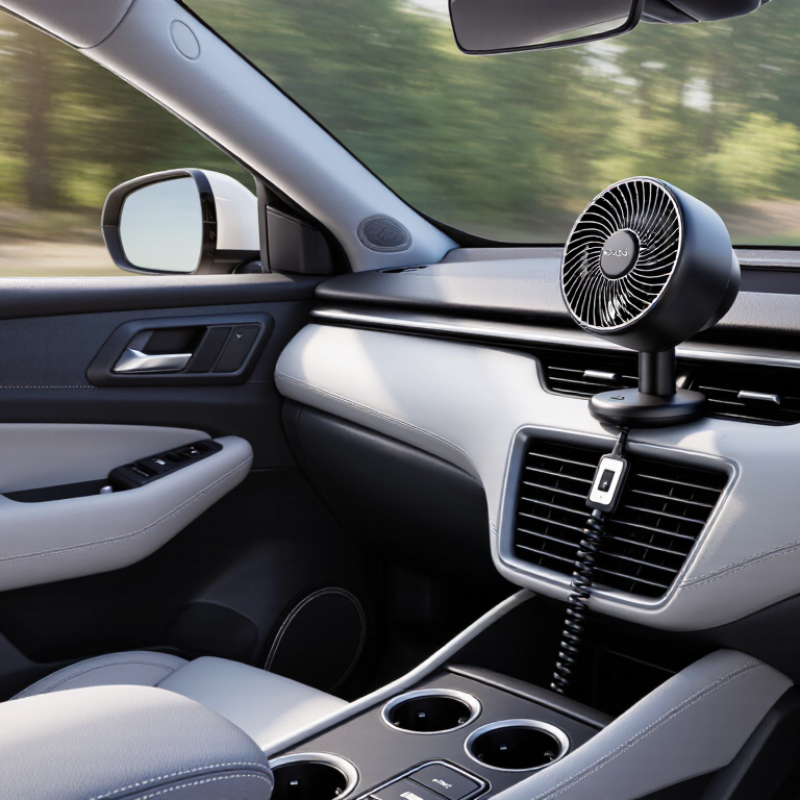
A hot cabin can make even a short drive uncomfortable. A compact Auto Fan For Car may help circulate air, but the right choice depends on your vehicle, climate, and daily routine. A fan that works well in a parked sedan may feel weak in a large SUV. Small details matter.
Start by considering where the fan will sit and how it will be powered. Check the available mounting space, the reach of its cable, and whether its plug matches your car’s outlet. Look for clear airflow and speed information, not just bold claims on the box. If possible, compare the fan’s dimensions with the space around your dashboard or headrests before buying. A sturdy clip or stable base can prevent distracting movement on rough roads.
Think about noise, too. A loud motor may seem acceptable in a store, then become tiring during a long commute. Adjustable speed settings give you more control, while a guarded blade and secure installation help reduce everyday risks. Keep the fan clear of airbags, pedals, and the driver’s sightline, and follow both the fan maker’s instructions and your vehicle manual. These checks are easy to overlook.
There is no perfect choice for every car. Sometimes, a higher airflow rating looks impressive but does not suit the mounting position. That is worth reconsidering. This guide explains how to compare fan types, power options, airflow, noise, and build quality, so you can choose with practical expectations rather than guesswork. A little measuring first can save an annoying return later.
Understanding the Role and Types of Automotive Fans
How to Choose the Best Auto Fan for Your Car?
Understanding the Role and Types of Automotive Fans
An automotive fan moves air through the radiator and air-conditioning condenser, especially when the car is slow or stationary. Without enough airflow, coolant temperature can climb during traffic, even on a mild day. Cars commonly use electric fans, engine-driven fans, or both. Electric fans switch on according to temperature or air-conditioning demand. Engine-driven fans turn with the engine, sometimes through a temperature-sensitive clutch. The right setup depends on the vehicle’s original cooling design, not just fan size. A larger fan is not automatically better.
The U.S. Department of Energy’s fueleconomy.gov notes that air conditioning can reduce conventional-car fuel economy by more than 25% in very hot conditions, particularly on short trips. This is not a fan-efficiency figure: the cooling system, compressor, and driving conditions all matter. Still, it shows why airflow and cooling demand deserve attention. Listen for scraping or irregular fan noise, and watch for temperature changes while idling. A fan that runs constantly may indicate a fault, but it can also be normal when the air conditioner is operating. Diagnosis takes context.
Tips: Match the replacement fan to the vehicle’s specified airflow, diameter, and electrical requirements. Check the fuse, wiring, and temperature sensor before replacing the fan. Small details matter. Don’t overlook a blocked radiator; I’ve seen airflow problems blamed on the fan too quickly.
Identifying Your Car’s Cooling Requirements
Your car’s cooling requirements depend on its engine, radiator layout, and typical driving conditions. Long idling in summer traffic creates a different demand from steady highway driving. Check the owner’s manual for cooling-system specifications, then measure the radiator’s available mounting area and note whether a shroud is fitted. Confirm the fan’s voltage, airflow direction, and electrical load match the vehicle. A fan that fits physically may still draw too much current or push air the wrong way.
Tips: Inspect the radiator for blocked fins, leaks, or debris before replacing the fan. A new fan cannot correct every cooling problem. Keep measurements handy, including the mounting depth behind the radiator.
Consider when the temperature rises: during slow traffic, towing, or only with the air conditioning on. These details help identify whether airflow is the likely issue. Also check the wiring, relay, and temperature control, since a sound fan may not receive power reliably.
A paper measurement can still miss a tight clearance near a belt or hose, so verify the fit carefully before installation. If overheating continues, have the cooling system assessed rather than relying on a larger fan alone.
Comparing Fan Size, Airflow, Power, and Noise
An auto fan should fit the available space without blocking nearby vents or controls. Measure the mounting area before comparing sizes. A larger fan may move more air, but only if its blades have room to draw and discharge it. Check the airflow rating, usually listed in cubic feet per minute, and compare figures measured under similar conditions. A high number alone can mislead. Grilles, tight clearances, and poor placement may reduce airflow once the fan is installed. For a small cabin, steady air directed toward the driver may feel better than a powerful blast aimed at the windshield.
Power matters, too. Check the fan’s voltage and current draw, then confirm that the vehicle’s outlet or circuit can support it. A fan with several speed settings offers more control, but its highest setting may sound distracting on a quiet commute. Listen for rattling as well as motor hum. Small vibrations can become irritating over a rough road. If possible, test the fan at the speed you expect to use most, not just its lowest setting. A quieter model with modest airflow may suit daily driving, though it might disappoint on a hot afternoon. That trade-off is easy to underestimate. Keep the cord clear of pedals and moving parts, and follow the vehicle and fan instructions during installation.
How to Choose the Best Auto Fan for Your Car? - Comparing Fan Size, Airflow, Power, and Noise
| Fan Diameter |
Typical Airflow |
Typical Current at 12 V |
Approx. Electrical Power |
Typical Noise at 1 m |
Best Suited For |
Key Fitment Consideration |
| 7 in (18 cm) |
300–600 CFM |
3–6 A |
36–72 W |
45–58 dBA |
Small radiators, compact vehicles, or auxiliary cooling |
Check that the fan covers the intended area without blocking other components. |
| 9 in (23 cm) |
500–900 CFM |
5–9 A |
60–108 W |
48–62 dBA |
Compact cars and supplemental cooling installations |
Confirm mounting points and clearance from the radiator, hoses, and engine. |
| 10 in (25 cm) |
700–1,200 CFM |
7–12 A |
84–144 W |
50–65 dBA |
Many compact and midsize cooling applications |
Compare the fan’s dimensions with the available shroud or mounting area. |
| 12 in (30 cm) |
1,000–1,800 CFM |
10–18 A |
120–216 W |
53–68 dBA |
Midsize vehicles or higher cooling-demand setups |
Use wiring, a fuse, and a relay rated for the fan’s specified current. |
| 14 in (36 cm) |
1,500–2,500 CFM |
15–25 A |
180–300 W |
56–72 dBA |
Large radiators and applications requiring substantial airflow |
Check radiator coverage, available depth, charging-system capacity, and circuit protection. |
Values are representative ranges for 12 V electric fans, not guaranteed specifications. Actual airflow, current draw, and noise vary with fan design, operating voltage, shroud, installation, and test conditions. Verify the vehicle’s available space and the fan manufacturer’s specifications before choosing.
Checking Vehicle Compatibility and Installation Needs
Check fitment before comparing airflow claims. Record the vehicle’s year, make, model, engine, and cooling package; trim differences can change the radiator or shroud. Measure the clear opening, then compare fan diameter, depth, mounting points, and blade clearance. A fan must not touch the condenser, belts, or nearby wiring. An advertised airflow figure alone is weak evidence because test conditions vary. Confirm whether air should be pushed through the radiator or pulled through it.
Direction matters.
Check the service manual for system voltage, connector type, current draw, and fuse requirements. Never treat a larger fuse as a solution to a mismatch. S&P Global Mobility reported that the average age of U.S. light vehicles reached 12.6 years in 2024. That figure does not predict fan fitment, but it makes inspecting brittle connectors, corroded grounds, and old repairs worthwhile. Look closely. With the engine cold, test the mounting area and trace the wiring before ordering. SAE J1128 covers low-voltage primary cable requirements, but it cannot confirm whether a particular fan fits your vehicle.
One detail is easy to miss: leave room for hoses to flex as the engine moves. I would recheck that clearance; a static measurement can be misleading.
Evaluating Durability, Safety, and Maintenance
An auxiliary auto fan works through heat, vibration, and road grit, so airflow ratings are only part of the picture.
Check for a rigid frame, balanced blades, and a motor that turns smoothly without scraping. Small details matter. A cracked blade or loose mount can cause noise and shorten the fan’s service life. Choose a unit that fits the available space without touching hoses, wiring, or nearby parts. A tight fit is not always a good fit.
Safety depends on installation as much as construction. Follow the vehicle’s service instructions before working near the fan; some systems can start unexpectedly. Use the specified fuse and suitable wiring, and keep wires clear of hot or moving parts. If the electrical connections are unclear, ask a qualified technician rather than guessing. For maintenance, inspect the mounting points and connectors periodically, looking for corrosion, frayed insulation, or looseness. Clear dust with a soft brush, not a forceful spray. A clean fan can still have hidden wear, so listen for new rattles and check for blade damage. It is easy to focus on appearance and miss a small electrical problem.