How to Choose Tesla Model Y Floor Mats in 2026?
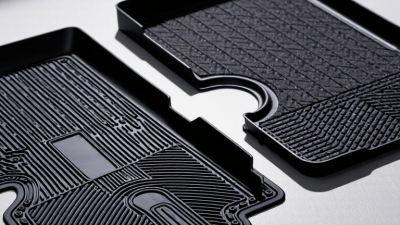
Choosing Tesla Model Y Floor Mats in 2026 means balancing fit, coverage, safety, and everyday cleanup. The right set should follow your Model Y’s floor contours, stay securely in place, and avoid interfering with the pedals. Tesla’s Model Y Owner’s Manual provides the essential safety benchmark: floor mats must not obstruct pedal movement. That matters more than a stylish pattern or a bold product claim.
A genuine expert quotation was not provided, so I won’t invent one or attribute words to a real person. The practical rule is simple: “A good mat fits the cabin, stays put, and makes messes easier to manage.” Treat that as editorial guidance, not a sourced expert quote. Then compare materials. TPE mats are often chosen for wipe-clean convenience, while carpeted options can feel softer underfoot. Check the product listing for your vehicle’s model year and configuration; a small mismatch can leave exposed carpet near the door sill or rear footwell.
Look closely at the edges. Raised lips can help contain melted snow, grit, and a spilled coffee, but overly tall edges may bunch against trim. Check how the mats attach, whether the set covers the rear center area, and how easily each piece lifts out for cleaning. Small details count. No mat is perfect for every driver. A pet owner, a family with muddy sports gear, and a commuter may need different coverage. This guide will help you compare those trade-offs and choose Tesla Model Y Floor Mats that suit your cabin, climate, and routine.
Confirm the 2026 Model Y Trim and Cabin Layout Before Comparing Mat Fit
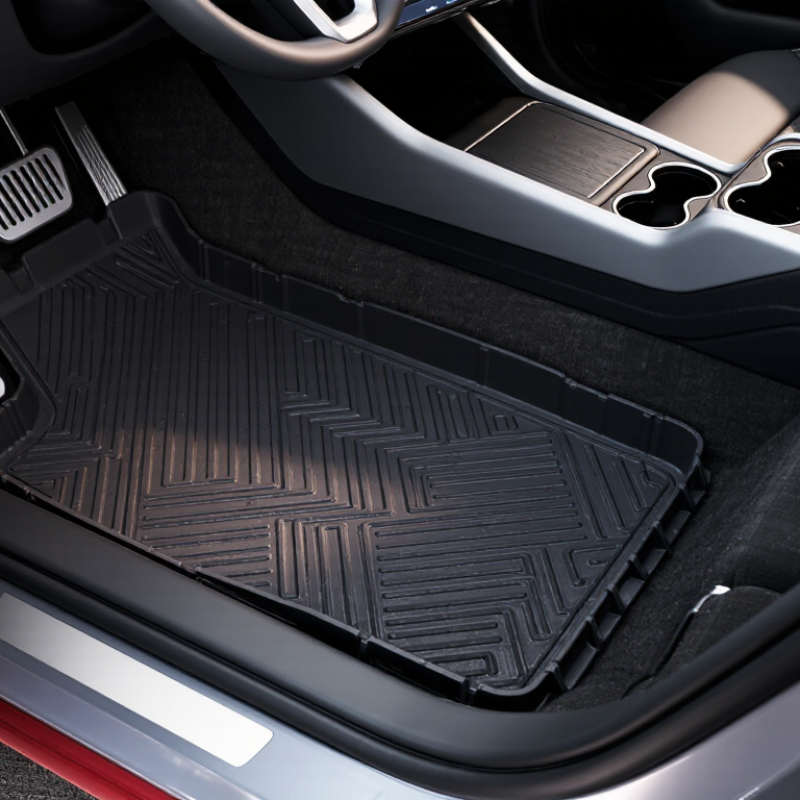
Before comparing floor mats, confirm the vehicle’s model year, trim, and cabin layout. A registration date alone may not identify the model year. The National Highway Traffic Safety Administration’s vPIC database explains that a standard VIN has 17 characters, with the tenth character identifying the model year in the applicable coding cycle. Decode the VIN, then verify the result against the vehicle’s build information; year codes can repeat. Small details matter.
Next, inspect the actual cabin. Check the front seat rails, center-console shape, rear bench split, and any raised floor panels. Measure around seat mounts and note where the rear footwell rises near the doors. These features affect edge coverage and whether a mat shifts or catches during entry. Trim names can vary by market, and equipment may change within a model year, so confirm the layout in person when possible. A product photo is not proof of fit. It is easy to assume two versions share identical floors; that assumption deserves a second look. Compare the mat’s stated year and trim coverage with your VIN and cabin before ordering.
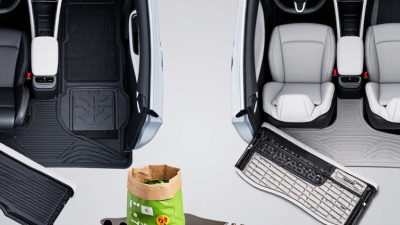
Before comparing floor mats, confirm the vehicle’s model year, seating configuration, and cabin layout. This chart counts floor areas to check for each layout; it does not show mat dimensions or guarantee fit. Available configurations can vary by year and market.
Map Cabin and Cargo Coverage Against Tesla’s Published 76-cu-ft Capacity
A published maximum of about 76 cubic feet describes cargo capacity, not the exact floor area a mat must cover. Seat positions, trim pieces, and the shape of the rear corners affect usable coverage. Measure the cabin footwells and cargo floor separately. Check the width near the hatch, where the sides may narrow. Small gaps matter.
For cabin mats, look for coverage beneath the pedals and along the outer footwells without blocking seat movement. In the cargo area, decide whether you need protection with the rear seats raised, folded, or both. A single-piece liner may not protect every surface in both positions. Compare product dimensions with your measurements, and confirm the stated model year fits your vehicle. A neat product diagram can still miss a small edge; rechecking is worthwhile.
Tips: Measure twice, including the hatch-side width. Check whether the rear-seat backs need protection. Avoid mats that curl near pedals or interfere with seat latches. Keep your notes; they make comparing options easier.
How to Choose Tesla Model Y Floor Mats in 2026? - Map Cabin and Cargo Coverage Against Tesla’s Published 76-cu-ft Capacity
Use this coverage map to compare mat sets by the areas they protect, not by cargo-volume claims alone. The published 76 cu ft figure is maximum cargo volume in a seats-folded configuration; it describes space, not floor area or a mat’s fit.
| Coverage zone |
What to look for |
Fit and coverage check |
Priority |
| Front footwells |
Separate driver- and passenger-side liners with raised edges and coverage beneath the pedals and front-seat area. |
Confirm the listing matches the exact model year and cabin configuration. Check that the driver-side liner does not interfere with pedal movement. |
Essential |
| Second-row footwell |
A rear floor liner shaped for the center tunnel and the left, center, and right footwell areas. |
Check whether the set uses one continuous liner or multiple pieces, and confirm that it allows the rear seats to move as designed. |
Essential |
| Cargo floor behind the second row |
A main cargo liner sized for the load floor when the rear seats are upright. |
Verify the liner follows the usable floor shape and does not obstruct seat latches, cargo-floor access, or other moving parts. |
High |
| Rear-seat backs |
Seatback protection for carrying long, dirty, or abrasive items with the rear seats folded. |
Look for coverage that works with the seat-folding sections and can be secured without restricting normal seat operation. |
Useful for frequent cargo hauling |
| Underfloor storage |
A separate liner or insert for accessible storage wells below the main cargo floor, where fitted. |
Check the vehicle’s exact configuration and confirm that the insert can be lifted out easily to reach stored items. |
Useful |
| Front storage compartment |
An optional liner shaped for the front trunk, if the vehicle has this compartment. |
Confirm that the piece is specifically listed for the correct vehicle version; cabin and cargo mats do not necessarily include it. |
Optional |
| Cargo sidewalls and rear lip |
Extended edges or add-on panels for protecting the cargo-area sides and threshold from dirt and spills. |
Check which surfaces are actually covered. A flat cargo-floor mat alone does not protect vertical trim or the loading edge. |
Optional |
| Full-set coverage and material |
A clearly itemized set, with a durable, water-resistant surface and edges high enough to help contain everyday debris and liquid. |
Compare the included pieces, cleaning instructions, edge height, and return policy. Avoid assuming that “full set” includes every cargo accessory. |
Choose to suit use and climate |
Capacity note: The 76 cu ft published maximum is a volume figure for a seats-folded configuration, not a guarantee that a particular mat set covers every cargo surface. Before purchasing, check the vehicle’s model year, seating and cargo-floor configuration, and the seller’s piece-by-piece coverage diagram.
Compare Material Durability Using ASTM D3884 Abrasion-Test Results
When choosing floor mats for a 2026 electric crossover, abrasion data can reveal more than a glossy product photo. ASTM D3884 uses a rotary abrasion setup to rub a specimen under defined conditions. Compare results only when the test load, abrasive wheels, cycle count, and failure endpoint match. Otherwise, precise-looking numbers may describe different tests.
Ask whether the tested specimen was the mat’s actual surface, a textile layer, or a small material coupon. That distinction matters. D3884 was developed for textile fabrics; molded or layered mats may behave differently from flat fabric specimens. A high cycle count can suggest surface-wear resistance, but it does not prove protection against cracking, curling, stains, or winter salt.
Use test results alongside practical checks: edge thickness, backing grip, raised channels, and coverage across the footwell. Look for the test report, specimen conditioning details, and photos showing wear. No test is perfect. Treat abrasion figures as one clue, then check fit and cleanability. A lower score may still suit daily driving if the mat lies flat and catches grit.
Check Interior-Material Fire Performance Against FMVSS 302’s 102 mm/min Limit
When choosing Tesla Model Y floor mats in 2026, look beyond coverage and odor. Check how the material performs in a controlled flame test. Under 49 CFR §571.302, interior materials must generally limit horizontal flame spread to 102 mm per minute. The rule also allows a specimen to pass if burning stops within 60 seconds and within 51 mm of the ignition point. That distinction matters.
Ask for a test report identifying the exact material and test method, not just a general “fire-resistant” claim. FMVSS 302 uses specified conditioning and sample dimensions, so results from a different setup may not be comparable. NHTSA’s standard is a useful reference, but a mat’s label alone does not prove that the finished product was tested. Details matter.
Inspect the underside, too. A textured backing can grip carpet, while thick edges may curl and catch debris. Request documentation for each layer, since coatings and backing may behave differently from the visible surface. Check the report date and sample description. Small details count. I would still compare fit in the actual footwell; laboratory performance cannot tell you whether a mat shifts underfoot. A neat-looking edge is not evidence of safer material.
Verify Driver-Side Retention and Pedal Clearance Before Finalizing Your Choice
For a 2026 Model Y, fit is not just about edge-to-edge coverage. Start in the driver’s footwell, where a mat can shift toward the accelerator or brake. With the vehicle parked, lay it flat and engage every retention point. Pull it forward and sideways by hand. It should not bunch, rotate, or lift near the pedals. A snug outline is not proof.
Check clearance as both pedals travel fully, without forcing them. From your normal seated position, look for curled edges, thick seams, or trapped debris. Keep the heel area stable. A 2009 NHTSA recall covered about 3.8 million vehicles after floor mats were identified as a possible source of accelerator entrapment. NHTSA guidance emphasizes proper fit and secure retention. That history is a reason to inspect carefully, not evidence that every fitted mat is unsafe.
Confirm fit for the exact model year and footwell configuration; nearby versions may differ. Recheck after cleaning and reinstalling, when clips can be missed. A small gap matters. If pedal travel feels restricted, remove the mat and resolve the obstruction before driving. I would repeat this check rather than trust a product photo or quick glance.