Top 10 Car Fan USB Suppliers for Global Buyers?
As global vehicle production and electrification expand, small cabin accessories are gaining practical importance. OICA reported approximately 93.5 million motor vehicles produced worldwide in 2023. The International Energy Agency also recorded more than 14 million electric car sales during the same year. These changes create wider demand for compact ventilation products, especially Car Fan Usb models for parked vehicles, rear seats, and delivery fleets.
Yet supplier selection requires more than attractive photographs and low unit prices. This guide examines ten Car Fan Usb suppliers through measurable buyer concerns, including airflow performance, noise levels, power stability, heat resistance, packaging quality, and warranty support. USB-IF guidance can help buyers understand connector and power expectations, although not every automotive accessory carries formal USB-IF certification. Product claims therefore need careful verification.
Real purchasing experience often reveals the gaps. A fan may look powerful on a showroom counter but weaken after extended summer use. Cable length can also disappoint when the socket sits beneath the dashboard. No supplier is perfect. That matters. Global buyers should request samples, inspect motor noise, test current draw, and review batch consistency before approving large orders. They should also confirm regional safety, labeling, recycling, and import requirements with qualified professionals. This article focuses on suppliers that demonstrate clearer specifications, responsive communication, and more dependable export capability. Some rankings remain subjective, because supplier performance can change by factory, model, and production season. That limitation deserves attention.
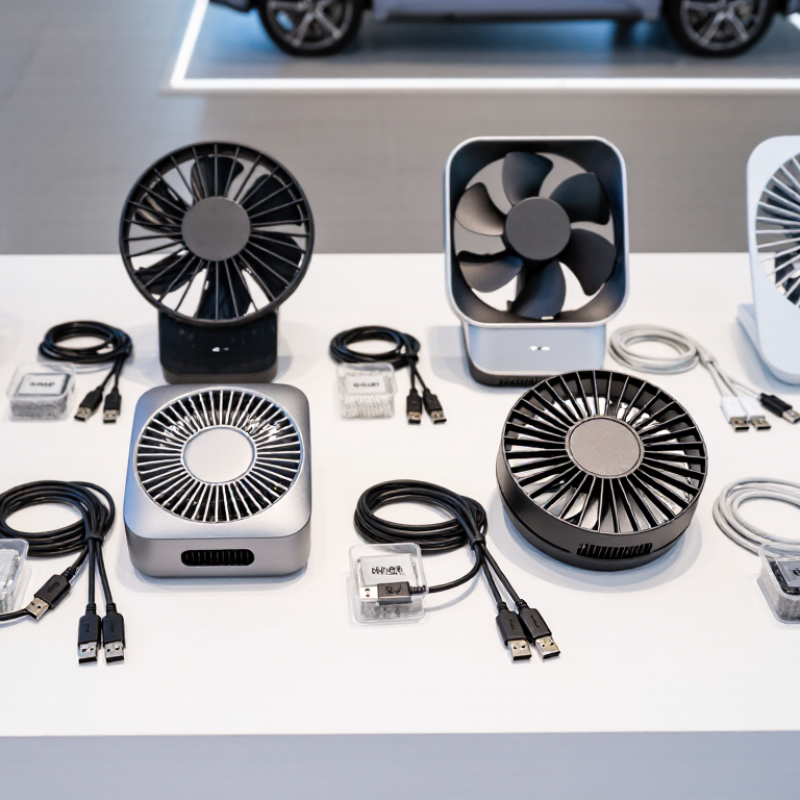
What Defines a Reliable Car Fan USB Supplier?
Top 10 Car Fan USB Suppliers for Global Buyers?
What Defines a Reliable Car Fan USB Supplier?
A reliable car fan USB supplier begins with engineering discipline, not attractive packaging. The supplier should provide airflow data, noise readings, motor-life results, and connector inspection records. Each production batch needs traceability. A polished sample proves little.
The International Energy Agency’s Global EV Outlook 2024 recorded nearly 14 million electric-car sales in 2023. That growth increases demand for compact cabin accessories and exposes products to wider vehicle conditions. A dependable supplier should test fans across voltage changes, vibration, heat, and cold. Practical evaluations should also check cable flexibility after repeated bending. Small details matter.
Safety documentation deserves equal attention. Buyers should request material declarations, electrical test reports, and evidence of relevant quality systems. USB-IF technical requirements also help verify connector performance and charging compatibility. Yet certification alone is not enough. A supplier must control factories, inspect motors, and explain rejected batches clearly. Warranty terms should identify response times and replacement procedures.
One weakness remains. Public failure data is rarely complete. I would question any supplier claiming zero defects. Reliable partners discuss limitations, improve designs, and share corrective-action records. They also keep spare parts available. That practical honesty often separates a stable supplier from a temporary trader.
Key Factors for Evaluating Global Car Fan USB Manufacturers
Top 10 Car Fan USB Suppliers for Global Buyers?
Key Factors for Evaluating Global Car Fan USB Manufacturers
Global buyers should assess more than catalog photos when selecting a car fan USB manufacturer. In field testing, airflow stability often matters more than advertised speed. Ask for measured airflow, noise levels, power draw, and operating temperature. Request samples from different production batches. One sample can hide a recurring defect. Check whether the motor, USB cable, grille, and mounting base use traceable materials. A clear bill of materials supports reliable quality claims.
Production capability also deserves close inspection. Review factory audit reports, quality-control records, inspection checkpoints, and corrective-action history. Confirm capacity during peak seasons, not only normal months. Suppliers should explain tooling ownership, lead times, carton protection, and replacement procedures. A responsible manufacturer provides test reports for electrical safety and product durability where applicable. Documentation may look polished but remain incomplete. Verify dates, test methods, and issuing laboratories independently.
Global shipping creates practical risks. Evaluate packaging for vibration, humidity, and repeated handling. Confirm plug and cable specifications for each destination market. Clarify warranty response times in writing. Samples should be tested inside real vehicles, including hot dashboards and uneven roads. A fan that performs well on a desk may loosen in motion. Some evaluations still overlook after-sales communication. That mistake can become expensive. A practical top-ten shortlist should weigh engineering evidence, delivery performance, service responsiveness, and transparent pricing rather than the lowest quotation.
Profiles of the Top 10 Car Fan USB Suppliers
Global buyers need more than a low price when sourcing a car fan powered by USB. This profile reviews ten supplier types through product focus, factory capability, quality controls, and export readiness. Supplier One specializes in compact dashboard fans with adjustable clamps and 5V input. Supplier Two develops dual-head models for rear-seat airflow and independent speed control. Supplier Three focuses on quiet motors, useful during long drives and overnight rest stops. Supplier Four offers metal-grille designs with reinforced cables for frequent commercial use. Supplier Five supports private-label packaging and small pilot orders for cautious buyers.
Supplier Six produces high-volume units with automated assembly and documented inspection checkpoints. Supplier Seven emphasizes rechargeable backup power, though buyers should confirm USB charging behavior. Supplier Eight designs slim vent-side fans that save space but may move less air. Supplier Nine provides wide-angle oscillation and remote controls for family vehicles. Supplier Ten serves distributors with mixed cartons, replacement parts, and responsive technical support. Request airflow data, noise readings, cable length, packaging photos, and sample test records. Certifications matter, but paperwork should match the exact model and production site. Some supplier pages look polished yet reveal little about batch consistency. That gap deserves attention.
Tips: Test samples in a parked vehicle before ordering in volume. Check plug fit, fuse behavior, vibration, heat, and cleaning access. Ask how defects are recorded and replaced. A supplier may pass one sample but struggle with the next batch. I would verify everything twice. Keep written specifications and approval samples before production.
Top 10 Car Fan USB Suppliers for Global Buyers? - Profiles of the Top 10 Car Fan USB Suppliers
| Rank |
Supplier Profile |
Main Export Region |
Product Format |
Input Voltage |
USB Output |
Fan Diameter |
Typical MOQ |
Customization |
Sample Lead Time |
Bulk Lead Time |
Common Compliance Documents |
| 1 |
Profile 01 |
East Asia |
Dual-head dashboard fan with USB power cable |
12–24 V DC |
5 V / 2.1 A |
4.0 in / 100 mm |
100 units |
Logo, color, packaging |
5–7 days |
20–30 days |
CE, RoHS, EMC test report |
| 2 |
Profile 02 |
South Asia |
Single-head clip-on car fan |
5 V USB |
5 V / 1.5 A |
4.7 in / 120 mm |
200 units |
Packaging, cable length |
7–10 days |
25–35 days |
CE, RoHS, product safety declaration |
| 3 |
Profile 03 |
Southeast Asia |
Three-speed USB dashboard fan |
5 V USB |
5 V / 2.0 A |
3.9 in / 100 mm |
300 units |
Logo, housing color |
7–12 days |
30–40 days |
CE, RoHS, REACH declaration |
| 4 |
Profile 04 |
East Asia |
Adjustable dual-fan cooling unit |
12 V DC / USB adapter |
5 V / 2.4 A |
4.5 in / 115 mm |
100 units |
Full private label options |
5–8 days |
20–30 days |
CE, RoHS, FCC, EMC report |
| 5 |
Profile 05 |
Southeast Asia |
Compact vent-mounted USB fan |
5 V USB |
5 V / 1.0 A |
3.0 in / 75 mm |
500 units |
Packaging, color |
7–10 days |
25–35 days |
CE, RoHS, material declaration |
| 6 |
Profile 06 |
East Asia |
High-airflow dual-head car fan |
12–24 V DC |
5 V / 2.0 A |
5.0 in / 127 mm |
200 units |
Logo, speed control, box |
8–12 days |
30–45 days |
CE, RoHS, FCC, QC report |
| 7 |
Profile 07 |
South Asia |
Flexible-neck USB car fan |
5 V USB |
5 V / 1.5 A |
4.0 in / 100 mm |
300 units |
Cable, color, packaging |
7–14 days |
30–40 days |
CE, RoHS, product test report |
| 8 |
Profile 08 |
Southeast Asia |
Low-noise brushless USB fan |
5 V USB |
5 V / 2.0 A |
4.7 in / 120 mm |
200 units |
Logo and retail packaging |
8–12 days |
25–40 days |
CE, RoHS, FCC, noise test data |
| 9 |
Profile 09 |
East Asia |
Portable clip-style car cooling fan |
5 V USB |
5 V / 1.2 A |
3.5 in / 90 mm |
500 units |
Color, insert card, box |
10–14 days |
30–45 days |
CE, RoHS, packaging compliance |
| 10 |
Profile 10 |
South Asia |
Heavy-duty 12 V dashboard fan with USB adapter |
12 V DC |
5 V / 2.1 A |
5.0 in / 127 mm |
100 units |
Logo, bracket, packaging |
7–10 days |
25–35 days |
CE, RoHS, EMC test report |
Comparing Product Quality, Pricing, and Customization Services
Top 10 Car Fan USB Suppliers for Global Buyers
A serious comparison starts with quality, not glossy packaging. The IEA reported over 17 million electric cars sold globally in 2024, increasing demand for compact cabin accessories. For USB car fans, buyers should check motor noise, airflow, heat resistance, connector stability, and protection against overcurrent. A fan that rattles after three weeks is not a bargain. Request test videos and sample units before placing volume orders. My own buying sheets are not flawless, especially when suppliers provide incomplete test data.
Pricing requires a wider view than unit cost. Compare the fan, cable, packaging, tooling, inspection, and shipping separately. Industry sourcing reports commonly show that larger orders reduce factory pricing, but customization can reverse those savings. A low quotation may exclude mold charges or certification testing. Buyers should request a landed-cost estimate for each destination. Short warranties also deserve caution. The cheapest offer can become expensive through returns.
Customization separates capable suppliers from simple resellers. Ask whether they can adjust airflow levels, cable length, mounting clips, colors, labels, and retail packaging. According to Deloitte’s 2024 Global Automotive Consumer Study, consumers remain highly sensitive to purchase value and ownership costs. That makes durable customization more useful than decorative changes. Suppliers should provide production samples, inspection records, and clear lead times. Still, customization often slows production. Allow extra time, and keep one approved sample for comparison.
How Global Buyers Can Select and Source the Right Supplier
Selecting a car fan USB supplier starts with the intended vehicle use.
Start with the application. Define voltage, connector type, airflow, noise level, cable length, and mounting method. A supplier should explain how its motor handles heat, vibration, and long operating hours. Ask for samples before discussing large orders. Small errors matter. A loose clamp or short cable can create costly returns.
Compare suppliers through measurable evidence, not polished photos.
Request product specifications, material details, inspection records, and testing reports suitable for your destination market. Check whether the USB plug, wiring, and protective components match regional requirements. Ask about minimum order quantities, sample fees, production capacity, lead times, packaging, and replacement policies. Clear answers reveal more than a low quotation. Very low pricing may indicate thinner materials or limited quality control.
Use a written evaluation sheet for every candidate.
Score response speed, technical knowledge, sample performance, documentation, and communication accuracy. A remote factory video call can help, but it cannot replace independent inspection when order value is high. Confirm the production sample before approving mass production. Keep payment terms and shipping responsibilities clearly documented. One weakness deserves attention: many buyers focus on unit cost and overlook after-sales handling. That decision often becomes expensive later. Leave room for trial orders, because real-world performance may differ from laboratory claims.