Shantou Chenghai Yate Auto Accessories Factory
Leave Your Message

Top 10 Types of Car Garbage Bins for Buyers

Car litter gathers quickly: a coffee lid rolls beneath the seat, snack wrappers collect in the door pocket, and receipts drift across the console. A well-chosen Car Garbage Bin gives these small messes a designated place. It can make daily commutes feel tidier and reduce the effort needed to clean the cabin. A small change.

Not every bin suits every vehicle or routine. Some drivers need a compact, leak-resistant container for parking receipts and gum wrappers. Families may prefer a larger model with a removable liner, while rideshare drivers often value easy access and quick cleaning. Placement matters, too. A bin hanging from a headrest may keep rubbish within reach, but it can crowd rear passengers. A console-mounted design saves floor space, though it must not interfere with controls or seat movement. Check how securely it attaches, and consider whether its opening remains easy to reach while parked.

This guide explores ten common types of car garbage bins, including hanging, collapsible, waterproof, and console-friendly options. It considers capacity, attachment style, materials, cleaning, and the kinds of trips each design handles best. These details are more useful than appearance alone. Still, product labels do not tell the whole story; a “leakproof” claim deserves a close look at seams, closures, and care instructions. Real-world needs differ, and no single design is perfect. Use the comparisons to identify practical trade-offs and choose a bin that fits your car, passengers, and habits. Sometimes the simplest option wins.

Top 10 Types of Car Garbage Bins for Buyers

How Car Garbage Bins Differ in Design and Installation

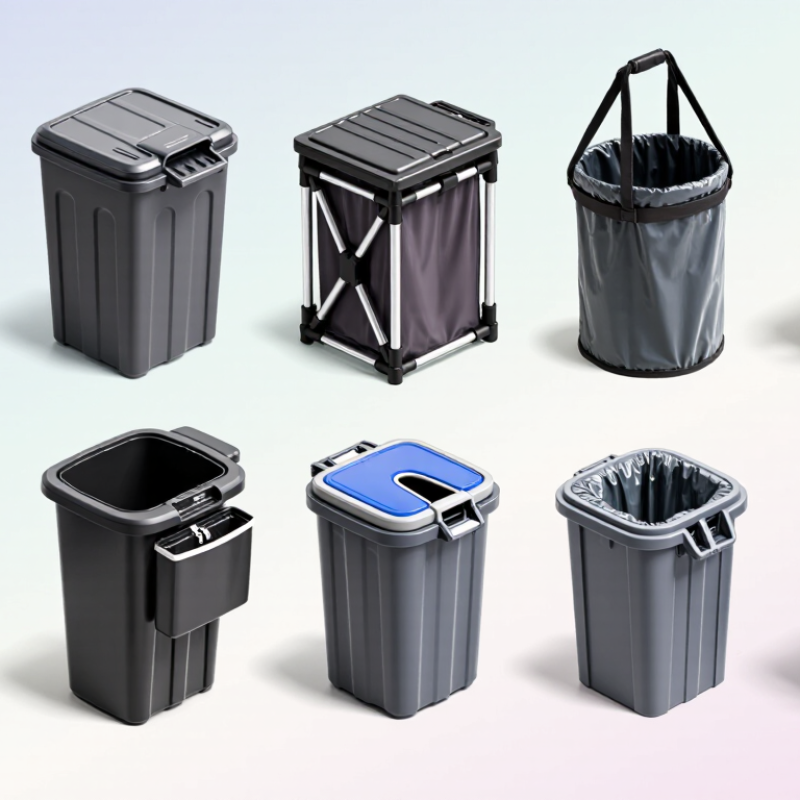
Car garbage bins vary as much in their mounting method as in their shape. Soft-sided hanging bins attach to a seatback or headrest, keeping wrappers within reach of rear passengers. They fold flat when empty, though a loose strap can let them swing during turns. Small, but useful. Rigid bins hold their shape and often suit a center console or footwell. Check the opening size against the space available before buying.

Installation affects daily use. A console-mounted bin stays accessible to the driver, but can crowd cup holders or nearby controls. Seatback models usually use adjustable straps; tighten them so the container does not knock against the seat. Door-pocket bins need a snug fit, while weighted floor bins are easy to move but may slide on smooth mats. Not always. A washable liner helps contain damp tissues or drink drips, but seams and fasteners still need occasional cleaning.

Match the design to the people and clutter in the car. A family may prefer a wider opening for snack wrappers, while a commuter might need a narrow bin that fits beside the passenger seat. Measure the mounting area, then check whether the lid opens without hitting a seat or console. One detail is easy to overlook: a full bin can become awkward to remove. That trade-off deserves a second look. Keep the container clear of pedals, seat tracks, and the driver’s view, even if another location seems less convenient.

Seat-Back, Headrest, and Hanging Car Garbage Bins

Seat-back, headrest, and hanging car garbage bins suit different cabin layouts. A seat-back model is easy for rear passengers to reach, especially on family trips. Headrest-mounted designs keep a small bin visible, but a swinging bag may bump knees or seats. Hanging bins near the console or door are convenient for the driver. Placement matters. Keep every bin clear of airbag areas, seat movement, pedals, and controls.

Fit matters more than capacity. Check the strap length, lid opening, and whether the liner removes cleanly. A leak-resistant container handles damp tissues better than a thin, open pouch. One drawback is easy to miss: a full bag can sag, brush against passengers’ legs, or loosen its strap.

NHTSA’s 2022 Traffic Safety Facts report recorded 3,308 people killed in crashes involving distracted drivers. That figure does not show that bins prevent crashes, but it underscores the value of keeping loose trash away from driving controls. Less can be better.

Tips: Test the bin with the seats in their usual positions. Use a washable liner, empty it often, and avoid overfilling it. A quick fit check can save a messy ride.

Console, Cup-Holder, and Door-Pocket Car Garbage Bins

Console, cup-holder, and door-pocket bins suit different clutter habits. A console bin can hold snack wrappers and receipts, but it may crowd controls or elbow room. Check its lid clearance and stability before buying. Small, but useful. A cup-holder bin keeps small scraps close, yet it may compete with your drink. Try both in place before deciding. Choose a washable interior for damp tissues or coffee drips, and empty it regularly.

The U.S. EPA’s Advancing Sustainable Materials Management report estimated 292.4 million tons of municipal solid waste in 2018, or about 4.9 pounds per person daily. That national figure is not a measure of car litter, but it shows why small, repeatable disposal habits matter. NHTSA reported 3,308 deaths in distraction-affected crashes in 2022. The figure does not show that garbage bins caused crashes; it does reinforce a sensible rule: handle rubbish when parked, not while driving.

Door-pocket bins can be handy for passengers and often leave the center console free. Check that the bin does not interfere with the door handle, speaker, or a water bottle. Fit varies by vehicle, so measure the pocket rather than relying on a product photo. One compromise remains: compact bins fill fast. I would rather empty one often than force the lid shut over a week’s worth of scraps.

Top 10 Types of Car Garbage Bins for Buyers

A qualitative comparison of common car-bin designs by everyday accessibility, containment, and space efficiency.

Scores are illustrative buying-guide ratings, not product-test results. The best choice depends on vehicle layout, available space, and the kind of waste you typically carry.

Leakproof, Collapsible, Disposable, and Multi-Use Car Bins

A car bin should fit the way you actually use your vehicle. Leakproof hard-shell models suit drink spills and damp tissues, while soft bins with sealed liners are lighter and easier to remove. Check the lid and seams; “leakproof” does not mean every part can handle a full liquid spill. Collapsible bins save space when empty, but flimsy sides may fold under heavier rubbish. Disposable liners make cleanup quick on road trips, though they create more waste.

Tips: Measure the space near your seat or console before buying. Secure the bin so it cannot tip during a turn. Small details matter.

Hanging bins attach behind a seat, while console bins keep wrappers within reach. Multi-use designs may include pockets for wipes or tissues, but extra features can make cleaning less convenient. Washable fabric bins are useful for dry rubbish and can be reused, provided the liner is removed and dried fully. Weighted-base bins stay steadier on the floor, though they still need a snug fit. I’d choose a simple, removable liner over several add-ons. It is not perfect, but it makes routine emptying easier and helps avoid lingering crumbs or odors. After a long drive, check corners and seams; that is where small leaks and bits of food can hide.

Top 10 Types of Car Garbage Bins for Buyers - Leakproof, Collapsible, Disposable, and Multi-Use Car Bins

Type Typical Capacity Common Placement Key Features Best Suited For Buyer Considerations
1. Leakproof Lined Bin About 2–5 L Floor, seat, or center-console area Water-resistant lining and a closable or secured opening help contain small spills and wet waste. Drivers carrying drink cups, tissues, or damp packaging Check that seams and the liner are easy to clean; “leakproof” performance depends on construction and proper use.
2. Collapsible Bin About 3–8 L when open Seat, floor, or trunk Folds down when empty and expands for use; often has a flexible body and a fastening strap. Drivers who want to save space when the bin is not in use Confirm its open and folded dimensions, attachment method, and whether it holds its shape when partially filled.
3. Disposable Bag-Style Bin Varies by bag; commonly a few litres Hanging from a hook or kept in a door pocket Lightweight bags can be replaced after use; some have adhesive or hanging tabs. Road trips, rental vehicles, or occasional use Check bag size and closure style. Disposable bags need regular replacement and should be secured so they do not obstruct the driver.
4. Hanging Seat-Back Bin About 3–8 L Behind a front seat or from a headrest Straps or hooks suspend the bin within reach of rear passengers; some designs include a lid. Families and passengers seated in the rear Check strap length, headrest compatibility, and whether the bin can swing into passengers or interfere with seat movement.
5. Floor-Standing Bin About 4–10 L Passenger-side floor or rear footwell Rigid or semi-rigid shape provides a wide opening and can be simple to lift out and empty. Vehicles with available footwell or cargo space Choose a size that does not interfere with pedals, seat adjustment, or safe passenger movement; secure it against sliding.
6. Seat-Edge or Door-Pocket Bin About 1–3 L Seat side, door pocket, or narrow cabin gap Compact form makes use of small storage areas and keeps light rubbish close at hand. Commuters and drivers with limited cabin space Measure the intended space first and ensure the bin does not obstruct seat belts, controls, or door operation.
7. Console-Sized Mini Bin About 0.5–2 L Cup holder or center console Small footprint is suited to wrappers, receipts, and other lightweight rubbish; some models have a push-top lid. Solo drivers and tidy, low-volume use Check cup-holder diameter and usable capacity; a small bin fills quickly and may need frequent emptying.
8. Multi-Compartment Bin About 4–10 L total Seat-back, floor, or trunk Separate sections can keep rubbish apart from items intended for recycling or temporary storage. Drivers who sort waste or carry several types of small items Look for clearly separated, easy-to-clean sections; sorting options depend on local recycling rules and facilities.
9. Lidded Odor-Containment Bin About 2–6 L Seat-back, floor, or console area A lid or closable opening helps conceal contents and may reduce the spread of odors from ordinary waste. Long drives and vehicles carrying food packaging A lid does not replace regular emptying or cleaning. Check that the opening is convenient and the lid closes securely.
10. Trunk or Cargo-Area Bin About 10–30 L Trunk, hatchback cargo area, or SUV load space Larger capacity and a broader base suit bulkier rubbish; some designs fold flat or include securing straps. Families, outdoor trips, and vehicles with regular cargo use Check cargo-space dimensions and tie-down options; keep the bin secured so it cannot shift while driving.

Note: Capacity ranges are general estimates, not standardized specifications. Actual size, materials, fit, and performance vary by product; check measurements and vehicle compatibility before buying.

How Buyers Can Compare Capacity, Materials, and Cleaning Needs

Buyers comparing the ten common types of car garbage bins should start with where the bin will sit. Hanging seat-back bins can hold more, but may crowd rear passengers. Cup-holder and door-pocket bins save space, though their openings are often small. Console, headrest, and floor models suit different cabin layouts. Collapsible bins pack away easily. Leak-resistant, waterproof, and rigid bins offer other trade-offs. Check the listed capacity, not just the product’s appearance. A two-liter bin may suit wrappers and receipts; a family’s snack waste can fill it quickly. Small, but useful.

Material affects both durability and cleaning. Oxford-style fabric is light, but crumbs can settle in seams. Smooth plastic wipes clean with a damp cloth, though a rigid bin may rattle against the console. Silicone is flexible and usually easy to rinse, but it needs a stable place to sit. Look for a removable liner or a wide opening if you expect sticky cups or food packaging. Check whether the lid comes off; narrow lids can make cleaning awkward. That detail is easy to miss.

Match the bin to actual routines. A commuter might prefer a compact, one-handed opening near the front seat. Parents may value a larger, washable model within rear-seat reach. Check straps, hooks, and dimensions against your car before buying. Measure the gap. Then consider how often you’ll empty it. A bin that holds a week’s rubbish sounds convenient, but stale odors can linger. I would not assume “waterproof” means effortless cleaning; seams and lids still collect grime. No perfect choice. The cabin layout matters more than a long feature list.