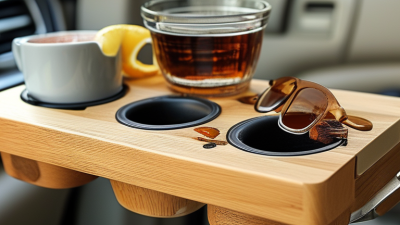
A car’s cup holder looks simple, but its size reflects a crowded design problem. It must fit between seats, clear the gear selector, and hold a drink steady over rough pavement. A narrow console may favor a compact opening; a family SUV may offer more room for larger bottles. Even within one vehicle, front and rear holders can serve different passengers and purposes.
Industry standards help explain what varies—and what does not. SAE International’s J1100, Motor Vehicle Dimensions, provides a framework for describing vehicle dimensions, but it does not set one universal cup-holder diameter. The U.S. Environmental Protection Agency’s Automotive Trends Report tracks changes in vehicle size, type, and design across the market. Those differences shape available cabin space, though the report does not directly prescribe holder dimensions. Small detail. Real trade-offs.
Container shapes add another complication. A tapered coffee cup, a wide travel mug, and a slim water bottle may all be called “drink containers,” yet they sit differently in the same recess. Automakers balance fit, reach, stability, and storage space, often within millimeters. There is no single size that suits every drink or driver. And, honestly, a holder that works perfectly with one mug can feel oddly useless with another. Understanding these competing needs makes the varied sizes less mysterious—and helps buyers check their own bottles before choosing a vehicle or accessory.
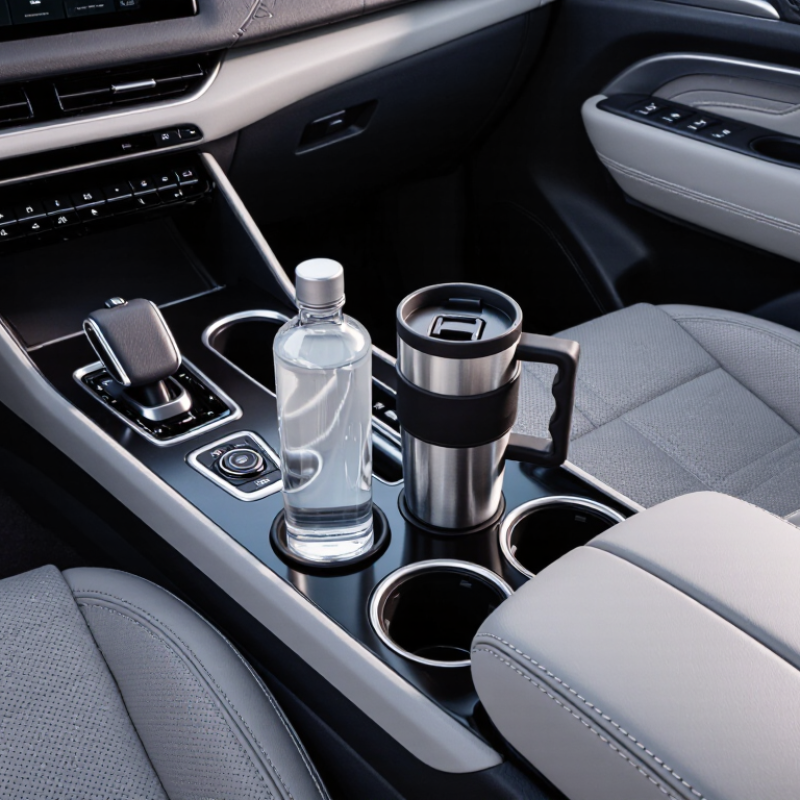
Car cup holders are shaped around the drinks people commonly carry, but those containers vary more than they seem. A slim can, a wide reusable bottle, and a travel mug may all be called “one cup,” yet their bases can differ by several centimeters. Designers must allow enough room for larger containers without letting smaller ones rattle around. That is a tricky balance.
Many holders include flexible tabs or a slightly tapered inner wall to steady different sizes. The base also needs enough depth to support a bottle during a turn, while leaving space for a hand to lift it out. Handles complicate matters. A mug may fit the opening but still bump against the console or gear selector. Small detail. Shape matters as much as diameter.
Vehicles may also need to accommodate short drink cans, tall water bottles, and mugs with wider lids. A holder cannot fit every container, especially when two holders sit close together. I have found that checking the holder’s narrowest point gives a more useful fit estimate than judging its opening alone. Still, that measurement misses lid clearance and awkward angles. Real use is messier than a product diagram. A bottle that fits while parked can feel cramped beside a seat belt buckle, or shift when the road curves.
Drink containers vary in both volume and shape, so capacity alone does not predict how they fit a car cup holder. A narrow 350-milliliter bottle may sit securely, while a shorter insulated mug can have a wider base. The difference often comes from thick walls, a removable sleeve, or a sturdy bottom.
Disposable cups usually taper toward the base. Their rims may look wide, yet the narrower bottom rests inside the holder. Reusable bottles are less predictable: some have straight sides, while others widen near the base for stability. Travel mugs can add another complication. Their handles and lids affect clearance even when the bottom fits.
Small details matter. A few millimeters can make a container wobble or stick. That distinction is easy to miss. Measure the container at its base, not across its widest point, and compare that measurement with the holder’s opening. Also check the holder’s depth; a tall, narrow bottle may reach the bottom, while a short cup may sit high and tip during a turn. Measurements are useful, though real fit can still vary with the holder’s shape and the container’s grip.
Cup holders vary because vehicle interiors are packaged around different bodies, seats, consoles, and control layouts. A narrow center console may only allow a small circular recess; a wide SUV console can fit larger openings or adjustable inserts. Dashboard-mounted holders must also clear screens, vents, and moving controls. There is no single cup-holder size that suits every cabin.
The EPA’s 2024 Automotive Trends Report puts the average new-vehicle footprint for model year 2023 at about 49.5 square feet. That broad average masks major differences between compact cars, pickups, and larger utility vehicles. SAE J1100 provides a framework for measuring vehicle dimensions, but it does not prescribe one universal cup-holder diameter. Designers balance container fit with reach, spill control, storage, and console space. It is a compromise, sometimes an awkward one.
Tips: Measure your usual travel mug at its widest point, including its handle. Check the holder’s depth and taper, not just the opening. A loose bottle can rattle over rough pavement; a tight one may be hard to lift while seated.
Drink containers have different base widths, while vehicle consoles have limited space. These approximate dimensions show why cup holders need different sizes or adjustable grips to keep drinks stable. Container dimensions vary by product; there is no single universal size.
Approximate container base diameters; actual measurements vary. Vehicle designs balance drink fit, stability, and available console space.
Cup holders differ because each cabin must fit common drink containers without wasting valuable interior space. A compact car may place one beside the gear selector, where a wide opening could crowd controls. A family vehicle can reserve more console area for bottles, travel mugs, and rear passengers. Small details matter. Designers compare container diameters, lid shapes, and how easily a driver can reach the holder.
A holder must steady a drink during braking, cornering, and rough pavement. Tapered walls, spring tabs, or removable inserts can grip narrower cups while accommodating larger ones. But a snug fit can become awkward when a mug has a broad handle or unusual base. No fit is perfect. Some flexibility helps, though soft materials may wear or collect crumbs over time. Real life varies.
Cabin space creates another constraint: deeper holders may interfere with storage bins, seat movement, or legroom. Engineers use measurements and physical trials, yet real containers vary more than neat drawings suggest. A bottle that fits in a showroom may wobble once half-empty, especially on a sharply curved road. That gap between testing and daily use deserves attention. The best layout is often a compromise, and sometimes it still feels slightly wrong.
| Design factor | Typical fit or measurement | Why sizes vary | Design trade-off |
|---|---|---|---|
| Holder opening | Many fixed holders are roughly 70–90 mm (2.8–3.5 in) across, though there is no universal size. | The opening must accommodate commonly used cups and bottles while fitting the vehicle’s console or door trim. | A wider opening fits more containers but can let a narrow cup move around. |
| Container base diameter | A standard U.S. beverage can is about 66 mm (2.6 in) in diameter; many reusable bottles have wider or tapered bases. | Packaging varies by beverage type, capacity, and container shape. The base—not the widest part of a bottle—determines whether it sits in the holder. | A close fit improves support but may reject larger bottles or travel mugs. |
| Grip and inserts | Flexible tabs, spring grips, or removable inserts can reduce the effective opening for smaller containers. | Adjustable features help one holder support containers with different base widths. | More adjustment improves versatility but adds parts, cost, and potential wear. |
| Holder depth | Depth varies with the console design; shallow wells are common where space below the surface is limited. | A deeper well can support a container lower down, but the space beneath the console may contain storage, wiring, or vehicle components. | More depth can improve stability but may reduce usable space elsewhere. |
| Holder spacing | Spacing is determined by the console layout rather than a single industry-wide standard. | Designers must leave room for adjacent containers, controls, armrests, gear selectors, and passenger movement. | Wider spacing helps prevent bulky cups from colliding but uses more cabin area. |
| Vehicle interior layout | Small cars, trucks, and larger passenger vehicles may place holders in different locations and shapes. | Available space depends on seat position, console width, door design, storage needs, and nearby controls. | A convenient location must not obstruct controls, knee room, or access to storage. |
| Stability in motion | A supportive rim and contact points help restrain containers during cornering, braking, and bumps. | Tall containers and narrow bases are more prone to tipping or wobbling than short, broad containers. | A snug, deep holder can improve support but may be harder to use with oversized containers. |
| Note: Dimensions are indicative examples, not universal automotive specifications. Actual holder sizes and fit vary by vehicle and container; checking the holder’s opening and the container’s base diameter is the most reliable way to assess compatibility. | |||
A car cup holder has to grip more than one kind of drink container. A narrow can, tapered paper cup, and wide travel mug have different shapes and base widths. Some holders use spring-loaded arms; others use flexible fins or removable inserts. These parts press gently against a container, helping limit rattling when the car turns. A little movement still happens.
Fit matters as people carry different drinks on the road. The National Coffee Association’s 2024 National Coffee Data Trends report found that 67% of Americans had coffee the previous day. That does not measure cup-holder sizes, but it shows why holders may need to accommodate more than cans. Vehicle interiors are measured using industry conventions such as SAE J1100, while cup-holder designs still vary by vehicle. Adjustable features help bridge that gap. Still, a holder that grips securely can feel too tight around a wide mug. Design is a compromise.
Tips: Measure the container’s base, not its rim. Place it upright, then check that the lid clears the dashboard and the container stays steady with a gentle push. Flexible arms should grip without squeezing so hard that lifting the cup becomes awkward.