Shantou Chenghai Yate Auto Accessories Factory

Leave Your Message

Top 10 Tips for Choosing the Best Fan for Your Car Air Circulation

When it comes to ensuring optimal air circulation within your vehicle, selecting the right "Fan For Car" can make all the difference. According to automotive expert, John Smith, “A good fan is not just about keeping cool; it’s about enhancing your overall driving experience.” With the vast array of options available on the market, choosing the best fan tailored to your specific needs can seem overwhelming.

In this article, we present the top 10 tips to guide you through the selection process, highlighting essential features to consider, such as size, airflow capacity, and energy efficiency. Understanding these factors can help you make an informed decision, ensuring that your car remains a comfortable and pleasant environment, no matter the weather outside. With the right fan, you can improve air circulation significantly, enhancing both comfort and safety while driving.

Top 10 Tips for Choosing the Best Fan for Your Car Air Circulation

How to Determine the Right Size Fan for Your Car

When selecting a fan for your car, determining the right size is crucial for optimal air circulation. The size of the fan should correlate with the dimensions of your vehicle's interior, including the passenger space and the area where the fan will be placed. A fan that is too small may struggle to circulate air effectively, leaving areas in the car stagnant and hot, while an oversized fan might use excess power and create uncomfortable noise levels.

To find the ideal size fan, start by measuring the available space where you intend to install the fan. Consider factors such as the shape of the area and any obstructions that might impede airflow. Additionally, assessing airflow capacity ratings can provide insight into how effectively a fan will function in your particular environment. Ideally, look for a fan that balances dimensions with airflow output to ensure that it not only fits your space but also enhances ventilation without overpowering the auditory comfort of passengers.

Top 10 Tips for Choosing the Best Fan for Your Car Air Circulation

Understanding Different Types of Car Fans Available

Top 10 Tips for Choosing the Best Fan for Your Car Air Circulation

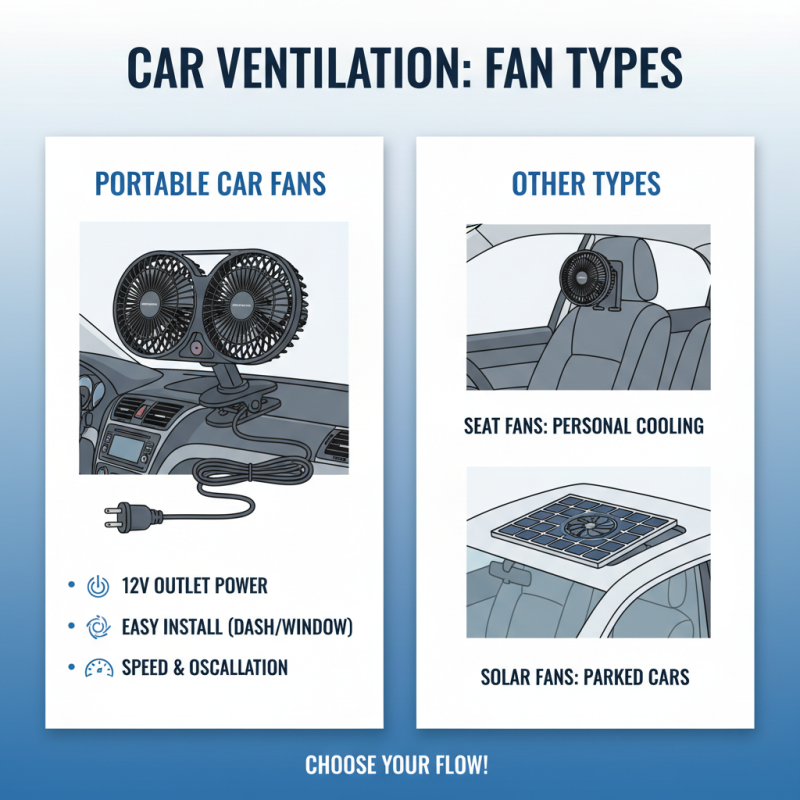
When it comes to enhancing air circulation in your car, understanding the different types of car fans available is essential for making the right choice. The most common type is the portable car fan, which can be easily installed on your dashboard or rear window. These fans are usually powered by your car's 12V outlet and are designed to provide immediate relief on hot days. With various specifications such as speed settings and oscillation features, portable fans can cater to different ventilation needs.

Another popular option is the extraction fan, which is particularly useful for removing stale air from the vehicle's interior. This type is often installed in a window or directly on the vehicle’s exterior, efficiently pulling out warm air and allowing cooler air to enter. Additionally, solar-powered fans have gained popularity due to their eco-friendly nature, harnessing sunlight to operate without drawing from your car’s battery. Understanding these options allows you to select a fan that best suits your vehicle's air circulation needs and personal comfort preferences.

Evaluating Fan Power and Airflow Capacity for Optimal Performance

When selecting a fan for enhancing your car’s air circulation, evaluating fan power and airflow capacity is crucial for achieving optimal performance. The effectiveness of a fan largely depends on its ability to move air efficiently, typically measured in cubic feet per minute (CFM). According to industry reports, a fan with a higher CFM rating can provide greater airflow, which is essential for maintaining comfortable temperatures during warm weather.

For most vehicle sizes, a fan that pushes between 100 to 200 CFM is considered adequate. However, larger vehicles or those with heavy window tint may benefit from fans exceeding 300 CFM to ensure sufficient air movement.

Moreover, considering the fan's power consumption is equally important. A fan’s power output not only affects how well it can circulate air but also its energy efficiency during operation. Many modern automotive fans are now designed to maximize airflow while minimizing power draw, often consuming less than 10 amps. This becomes particularly significant in hybrid and electric vehicles, where maximizing battery life is a priority.

Data from the Automotive Fan and Blower Association indicate that employing energy-efficient fans can result in a 20-30% reduction in energy consumption compared to traditional models. Thus, selecting the right fan by examining both its airflow capacity and power efficiency can significantly enhance your vehicle's air circulation, providing a more comfortable driving experience.

Considerations for Noise Levels in Car Fans

When selecting a fan for optimal air circulation in your car, one of the most crucial factors to consider is noise level. A fan that operates quietly can enhance your driving experience, allowing you to enjoy your music or have a conversation without distractions. Look for fans that specifically indicate low decibel levels in their specifications. It's essential to find a balance between performance and tranquility, as a loud fan can become quite bothersome during long commutes.

Additionally, consider the design and airflow capabilities of the fan, as they can influence how well it mitigates noise. Fans with adjustable speed settings often provide better control over sound levels; you can operate them at a lower speed for quieter airflow. Investing in a fan with a reputation for silent operation will not only keep you comfortable but also provide a pleasant atmosphere within your vehicle.

In your search for the ideal car fan, remember to assess customer reviews, focusing on comments about noise level. Other users can offer insights about their experience, helping you make an informed choice. A combination of thoughtful design, adjustable settings, and positive feedback about noise can lead you to the best fan for your car, ensuring a peaceful ride while maintaining excellent air circulation.

Top 10 Tips for Choosing the Best Fan for Your Car Air Circulation - Considerations for Noise Levels in Car Fans

Tip Number Tip Description Noise Level (dB) Airflow (CFM) Power Consumption (W)
1 Choose a fan with adjustable speed settings 28 60 15
2 Look for features like oscillation 30 70 20
3 Ensure ease of installation 25 55 10
4 Consider compact designs for small cars 27 50 12
5 Check for energy efficiency ratings 22 65 8
6 Look for warranty and after-sales support 24 60 11
7 Select a fan with good airflow direction control 29 75 16
8 Ensure it fits the power outlet of your vehicle 32 80 14
9 Read user reviews for insights on performance 26 55 9
10 Consider the design that matches your car's interior 23 65 13

Assessing Compatibility with Your Vehicle's Electrical System

Top 10 Tips for Choosing the Best Fan for Your Car Air Circulation

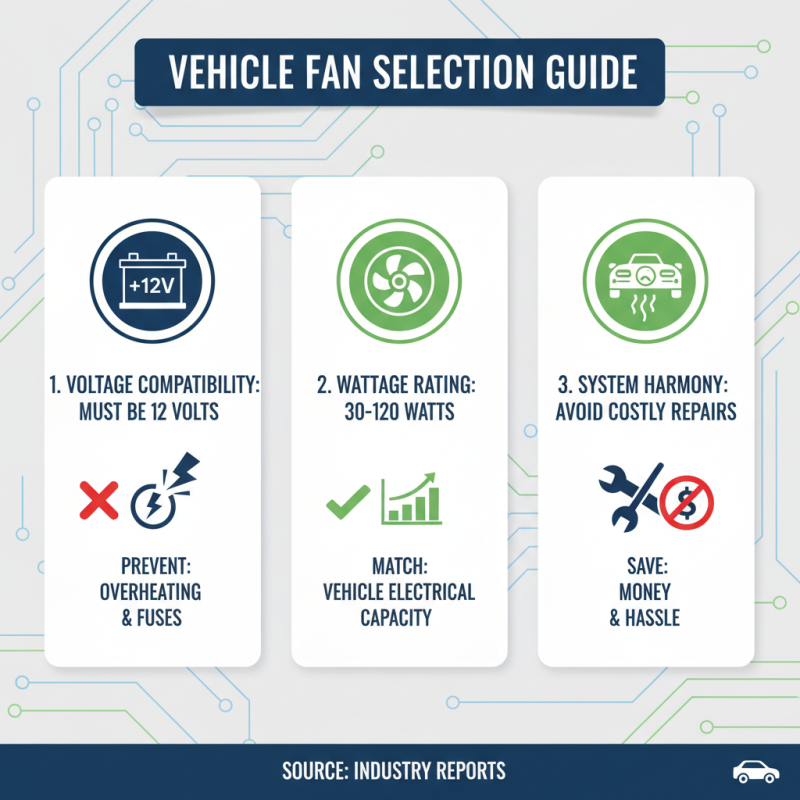
When selecting a fan for your vehicle’s air circulation, it is crucial to assess compatibility with your vehicle’s electrical system. According to industry reports, an average car electrical system operates at 12 volts, and the chosen fan must match this voltage to prevent any potential damage. Using a fan that requires a different voltage can lead to overheating or blown fuses, which may result in costly repairs. Additionally, the wattage rating of the fan should align with the vehicle’s electrical capacity, typically ranging from 30 to 120 watts for automotive fans.

It is also essential to consider the amperage draw of the fan. A fan with a high amperage draw may exceed the specifications of your car's wiring harness, leading to overheating issues. The National Highway Traffic Safety Administration (NHTSA) has noted that improper wiring and accessory installations are among the leading causes of electrical failures in vehicles. Thus, verifying the amperage requirement against your vehicle's fuse rating is imperative to ensure a safe and reliable operation. Additionally, consult the vehicle’s manual or a professional technician to ensure that modifications do not interfere with the existing electrical components, especially with advanced systems such as CAN bus architecture found in modern cars.