Top Portable Fan Manufacturers for Global Buyers
Portable Fan buyers face a crowded market, and a polished catalogue rarely tells the whole story. A fan may look sturdy in a product photo, yet feel noisy or unbalanced after an hour on a desk. For global buyers, choosing a manufacturer means looking beyond appearance. Battery capacity, airflow, charging options, materials, packaging, and production consistency all affect the final product. Small details matter. A loose hinge or unclear instruction sheet can create avoidable complaints.
This guide introduces manufacturers that may suit different sourcing needs, from compact personal fans to larger rechargeable models. It considers product range, manufacturing capabilities, customization options, quality processes, and communication—not just quoted prices. Buyers should confirm specifications directly and request samples where possible. A sample can reveal details a specification sheet may miss, such as button feel, grip, or sound. No shortlist is perfect. Supplier information changes, and a capable factory may still be a poor fit for a particular order. That deserves a second look. Use these profiles as a starting point, then assess each company against your own target market, order volume, timelines, and service expectations. A careful comparison cannot remove every risk, but it can help buyers ask clearer questions before committing.
Portable Fans: Product Types and Key Applications
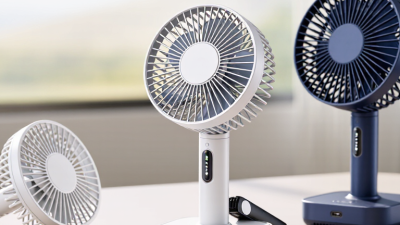
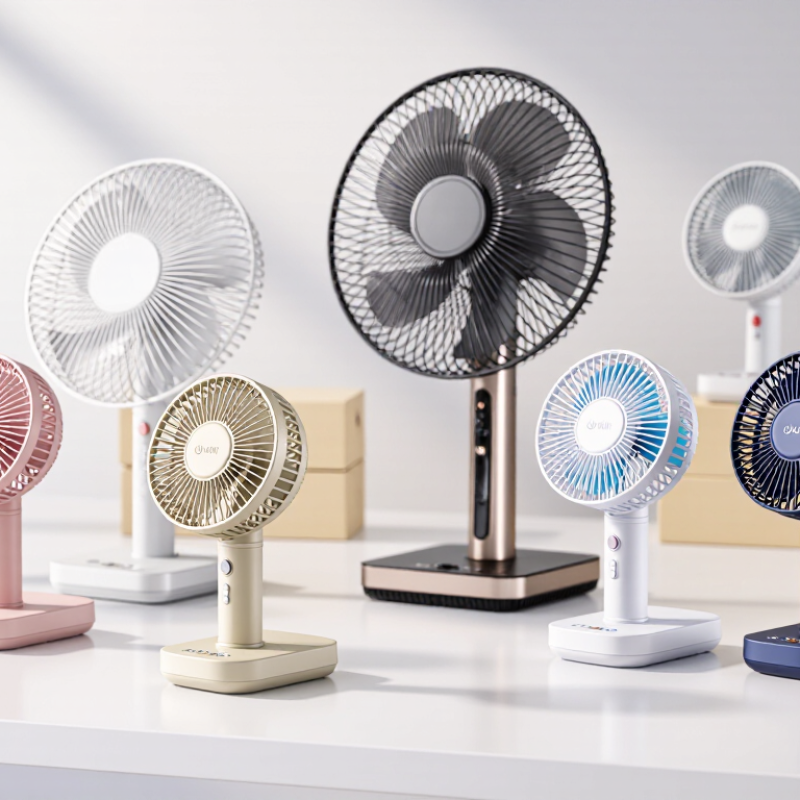
Portable fans come in several formats, each suited to a different setting. Handheld models are easy to carry through crowded streets or use during short outdoor activities. Desk fans provide steady airflow for a workstation, bedside table, or reception counter. Clip-on designs attach to strollers, shelves, or tent frames, while wearable neck fans keep both hands free. Small details matter.
Rechargeable fans are useful where outlets are scarce, such as campsites, transit queues, and temporary work areas. Their runtime depends on battery capacity, speed setting, and airflow resistance, so buyers should check test conditions rather than rely on a single advertised figure. For homes and offices, a compact fan can improve personal comfort, but it does not replace room ventilation or air conditioning. The trade-off is real.
In workshops, warehouses, and event spaces, portable fans can help direct airflow toward a specific work zone. Buyers should consider stability, protective grilles, noise, cleaning access, and whether the fan can withstand frequent movement. A lightweight unit may be convenient, yet less stable on uneven ground. For humid outdoor conditions, inspect materials and charging-port protection. These practical checks make it easier to match a fan’s size, power source, and airflow to its actual application.
Top Portable Fan Manufacturers for Global Buyers - Portable Fans: Product Types and Key Applications
Product categories and applications at a glance. Features vary by model; buyers should confirm specifications, certifications, and local-market requirements with suppliers.
| Product Type |
Common Power Source |
Typical Design Features |
Key Applications |
Buyer Checks |
| Handheld Fan |
Rechargeable battery or replaceable batteries |
Compact body, grip handle, simple speed controls; some models include a folding stand. |
Commuting, outdoor events, travel, and personal cooling. |
Battery capacity, runtime at each speed, charging connector, and guard safety. |
| Portable Desk Fan |
USB power, rechargeable battery, or mains adapter |
Stable base, adjustable tilt, and multiple speed settings; some designs can operate while charging. |
Home desks, offices, bedside tables, and study areas. |
Base stability, noise level, airflow direction, and compatibility with the intended power source. |
| Clip-On Fan |
USB power or rechargeable battery |
Spring clamp for attachment to an edge; many models have an adjustable fan head. |
Strollers, shelves, workstations, camping setups, and other spaces with a suitable edge. |
Clamp opening and grip, attachment stability, head adjustment, and protection around moving blades. |
| Neck Fan |
Rechargeable battery |
Wearable frame with airflow directed toward the face or neck; hands-free operation. |
Walking, outdoor work, travel, and events where carrying a fan is inconvenient. |
Fit and weight, airflow outlet placement, runtime, charging time, and hair-safety design. |
| Misting Fan |
Battery, USB, or mains power, depending on model |
Fan combined with a water reservoir or a connection for water; some models produce a fine mist. |
Outdoor leisure, patios, gardens, and suitable work areas in warm conditions. |
Reservoir capacity, refill method, leakage prevention, cleaning instructions, and humidity suitability. |
| Portable High-Velocity Fan |
Mains power or a high-capacity rechargeable battery |
Compact, directional airflow; generally designed for stronger air movement than small personal fans. |
Workshops, garages, camping, and other spaces needing localized air circulation. |
Airflow and noise specifications, operating time, power requirements, and intended indoor or outdoor use. |
Note: Portable fans circulate air but do not lower room temperature like an air conditioner. Actual performance and operating time depend on the design, settings, battery condition, and environment.
How to Evaluate Portable Fan Manufacturers
Choosing a portable fan manufacturer requires more than comparing unit prices. Ask for a sample and check its airflow, noise, balance, and controls in a real room.
Numbers matter.
Compare runtime claims with a timed test at different speed settings; battery performance can change noticeably at full power. Check whether the supplier explains motor types, battery capacity, charging time, and replacement-part availability. Clear answers are useful, but written test methods are better.
Review the manufacturer’s quality process, including incoming component checks and finished-unit inspection. Ask how defects are recorded and resolved, and whether production samples match the final specification. A factory visit or independent inspection can help verify processes, though neither guarantees every shipment will be perfect.
Not always.
Confirm packaging strength with a basic drop test, especially if products will travel long distances. Discuss minimum order quantities, lead times, and how delays are communicated. Request relevant product documents for your destination market, then verify that they match the exact model. Small details are easy to overlook; even a convenient charging port may not suit every buyer. Reflect on your own priorities before choosing: a quiet desk fan and a rugged travel fan need different trade-offs.
Leading Portable Fan Manufacturers by Region
East Asia remains a major sourcing region for portable fans, supported by broad access to motors, batteries, plastics, and electronics. Manufacturers in China often offer varied models and flexible production volumes, while suppliers in Japan, South Korea, and Taiwan may focus on compact engineering or refined components. Capabilities differ widely within each market. Small details matter. Buyers should compare airflow, noise, battery runtime, and charging performance using the same test conditions.
In South Asia, expanding assembly capacity can make India an option for buyers seeking regional production and shorter delivery routes. European manufacturers often serve specialist needs, such as durable workplace fans or carefully finished designs, though prices and production volumes may vary. North American companies may focus more on product development, distribution, or final assembly than on making every component locally. Regional labels can mislead; they are a starting point, not proof of quality. Ask manufacturers for sample units, clear component-origin details, and recent test records. Then check whether the quoted lead time includes tooling, inspection, and packaging. A polished sample can still hide uneven batch performance, so a small production trial is worth considering.
Comparing Manufacturing Capabilities and Product Offerings
Compare suppliers on motor design, battery integration, airflow testing, and production control. Strong factories document repeatable output across desk, clip-on, handheld, and rechargeable models. A wide catalog alone proves little. Request airflow and noise test methods, runtime at stated speeds, and inspection records from pilot runs. The IEA’s 2018 The Future of Cooling report estimates that air conditioners and electric fans use about one-fifth of building electricity worldwide. This is a broad estimate, not a figure for portable fans alone.
Tips: Compare battery runtime at the same speed setting. Ask how airflow and noise are measured.
Review product options by blade size, battery capacity, charging interface, speed settings, and replaceable parts. Check whether a supplier can customize housings or packaging without weakening quality controls. Sample testing, factory audits, and clear defect-handling procedures are useful evidence of manufacturing discipline. Be cautious with maximum-runtime claims: speed settings and room conditions affect real results. A detailed specification sheet helps, but it cannot replace testing a production sample.
Global Sourcing, Compliance, and Supplier Selection
Global sourcing for portable fans should begin with the destination market, not the lowest quotation.
The International Energy Agency’s 2018 report, The Future of Cooling, projects that global energy demand for space cooling could more than triple by 2050. Its analysis focuses mainly on air conditioning, not portable fans, but it highlights why buyers should examine motor efficiency, power ratings, and real operating performance. Ask suppliers for model-specific test reports, production samples, and clear records of component changes. A polished sample is not proof that every production batch will match.
Compliance needs market-by-market checks.
IEC 60335-1 covers general household electrical-appliance safety, while IEC 60335-2-80 addresses fans; applicable national requirements may differ. Verify the exact model, plug, voltage, labels, and required conformity documents before placing an order. For rechargeable models, confirm battery shipping documentation and test records as well. Certificates alone can be misleading if they cover another model or factory. I would still recheck details close to shipment; paperwork can change.
Tips: Compare at least two samples under the same conditions. Record airflow, noise, runtime, and charging time, then match those results against the supplier’s specification. Ask who handles corrective actions if inspection finds a mismatch. Keep the answer in writing.