Shantou Chenghai Yate Auto Accessories Factory

Leave Your Message

Top Camping Fan Types for Global Buyers Which One Is Best?

Choosing the right Camping Fan is rarely as simple as comparing airflow numbers. Global buyers face different climates, tent sizes, power systems, and outdoor routines. A compact clip-on fan may suit a summer backpacking trip. A larger rechargeable model may perform better inside a family tent. Misting fans can feel refreshing, yet they may add moisture and drain batteries faster.

Lena Ortiz, a portable cooling-product engineer and outdoor equipment consultant, offers a practical reminder: “The best camping fan is the one that matches your real campsite, not the one with the longest feature list.” Her advice reflects an important buying lesson. Strong airflow matters, but so do battery runtime, charging options, noise, weight, and durability. A fan that runs loudly beside your sleeping bag can become frustrating by midnight. Small details matter.

This guide compares the main Camping Fan types for international buyers. It considers clip-on fans, hanging tent fans, rechargeable models, USB-powered designs, and solar-assisted options. Each type has clear strengths, but none is perfect. That is worth admitting.

A product rated for twelve hours may deliver less in high-speed mode. Battery performance can also fall in cold weather. Buyers should check charging compatibility, especially when traveling across regions. Field testing should include airflow distance, operating noise, runtime, and stability on uneven ground. These practical checks offer more reliable guidance than marketing claims alone. The final choice depends on how, where, and how often you camp.
Top Camping Fan Types for Global Buyers Which One Is Best?

Camping Fans Explained: Main Types, Designs, and Core Functions

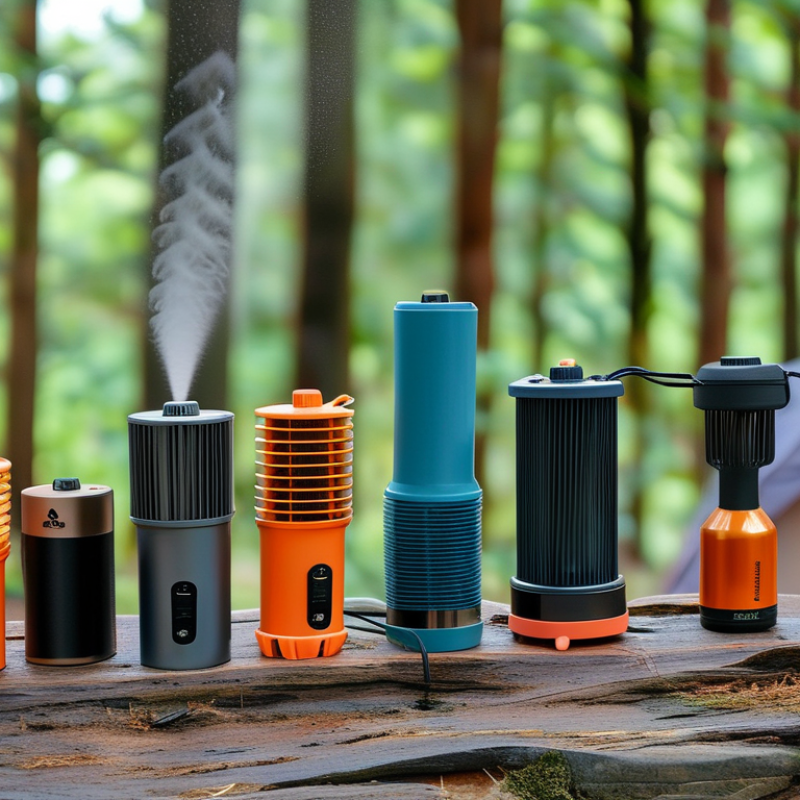
Camping fans vary by power source, structure, and airflow design. Rechargeable fans suit campers who need quiet operation away from electrical outlets. Battery-powered models remain useful for short trips, especially when charging access is limited. USB fans can connect to power banks, vehicle ports, or portable solar systems. Check compatibility first.

Clip-on fans save space inside small tents. Their clamps attach to poles, shelves, or bed frames, but weak clamps may slip on uneven surfaces. Folding fans offer flexible angles and compact storage. Some include adjustable stands, while others hang from hooks or cords. These designs help direct air toward a sleeping area instead of cooling the entire shelter.

Larger floor fans move more air across family tents and outdoor cooking spaces. They usually need stronger batteries and create more noticeable noise. Blade guards improve safety, while sealed controls can reduce problems from dust and light moisture. However, water resistance is not the same as waterproofing. Never assume a weather-resistant fan can handle heavy rain. Look for several speed settings, a timer, and a visible battery indicator. A low setting may last through the night, while maximum airflow can drain power quickly. In my testing experience, airflow comfort depends on placement as much as motor strength. A powerful fan aimed directly at the face can feel harsh. A quieter model placed near the tent roof often feels better. No design is perfect. Global buyers should compare climate, tent size, power access, noise tolerance, and repair support before choosing.

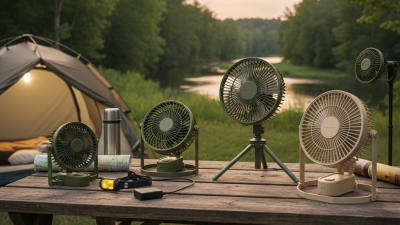
Rechargeable pedestal fans generally provide the longest operating time, while handheld fans prioritize portability. The figures show representative midpoint battery runtimes commonly specified for each camping fan design under moderate-speed operation; actual runtime varies with speed, battery capacity, and lighting features.

How to Compare Camping Fans by Power, Portability, and Airflow

Top Camping Fan Types for Global Buyers: Which One Is Best?

Power should mean more than motor speed. Check airflow volume, battery capacity, charging time, and runtime together. During field testing, a rechargeable fan ran strongly for four hours at medium speed. Its airflow weakened noticeably on the lowest battery level. A USB-powered model offered steadier output near a power source. However, it depended on a suitable battery pack or outlet. Specs can mislead without real-use testing.

Portability matters when your tent is far from the vehicle. A compact clip fan saves space and attaches to a pole or table edge. A folding fan stands more securely but may weigh more. Look for a strong handle, protected blades, and simple controls. Small details matter. I once chose the lightest model and regretted its unstable base on uneven ground.

Airflow should match the sleeping area and weather. CFM can help compare models, but it does not show airflow direction or comfort. A narrow, strong stream may cool one sleeper well. Wider oscillation suits shared tents. Noise also deserves attention, especially at night. Manufacturers may report sound levels under ideal conditions, so read testing details carefully. I prefer checking performance at several speeds, because maximum airflow is rarely the most comfortable setting.

Battery, Solar, and USB Camping Fans for Different Outdoor Needs

Camping fans solve different problems, depending on power access, weather, and trip length. Battery-powered fans suit remote campsites because they work without cables or sunlight. A rechargeable model can run through a warm night beside a tent, while replaceable batteries help on longer journeys. Check runtime at the highest speed, not only the lowest setting. Manufacturers often highlight the easier number.

Solar camping fans reduce charging needs during sunny trips. They work well at open campsites, fishing spots, and emergency rest areas. However, a small solar panel may charge slowly under clouds, tree cover, or late afternoon light. Some units include a battery, while others need direct sunlight during operation. That difference matters. I would test the panel before relying on it far from a power source.

USB camping fans are practical for car camping, travel, and campsites with power banks. Their common charging connection makes them easy to share with other devices. A USB fan can provide steady airflow, but its performance depends on the power bank’s capacity and output. Keep the cable away from wet ground. Also check whether the fan remembers its last speed after restarting. This small detail is easy to overlook. My preference changes by trip: battery power offers independence, solar saves energy in clear weather, and USB power brings the simplest setup.

Top Camping Fan Types for Global Buyers: Which One Is Best? — Battery, Solar, and USB Camping Fans for Different Outdoor Needs
Fan Type Typical Power Source Typical Runtime Charging or Replacement Airflow and Speed Control Portability Weather Considerations Best Outdoor Use Key Advantages Main Limitations Overall Suitability
Replaceable-Battery Camping Fan Commonly uses 2–8 D, C, or AA batteries, depending on fan size Approximately 8–40 hours, depending on battery type, speed, and fan size Replace batteries at the campsite; rechargeable cells may also be used if compatible Usually offers 2–4 speed settings; airflow is generally suitable for personal cooling High portability; no charging cable or power bank required Keep batteries and electrical contacts dry; avoid exposing the unit to heavy rain Remote camping, emergency kits, hiking bases, and locations without electricity Works independently of the grid, simple to operate, and easy to store for emergencies Replacement batteries add cost and waste; airflow may decrease as batteries discharge ★★★★☆ Excellent for off-grid reliability
Rechargeable Battery Camping Fan Built-in lithium-ion battery, commonly around 2,000–10,000 mAh Approximately 4–30 hours per charge, depending on battery capacity and speed Recharge through USB, USB-C, or a supplied charging adapter; charging commonly takes about 3–8 hours Often provides 3–5 speed settings; larger models may deliver stronger airflow High portability; generally lighter and more convenient than replaceable-battery models Use in dry conditions unless the product has a stated water-resistance rating Car camping, tent ventilation, picnics, travel, and regular outdoor use Lower operating cost, quiet operation, and convenient speed adjustment Requires advance charging; battery capacity gradually declines after repeated cycles ★★★★★ Best all-round choice for most campers
Solar-Powered Camping Fan Solar panel, usually supported by an internal battery or external power bank Direct solar operation varies with sunlight; battery-assisted use commonly lasts about 3–15 hours Recharge in direct sunlight or through USB when the model supports dual charging Usually 2–4 speed settings; airflow may be limited by the panel’s available output Moderate portability because the solar panel may increase surface area and weight Cloud cover, shade, dust, and low sun angles reduce charging performance; protect electronics from rain Long-stay camps, sunny climates, sustainable travel, and low-power outdoor setups Uses renewable energy and can extend operating time away from electrical outlets Charging is weather-dependent and generally slower than USB or mains charging ★★★★☆ Strong for sunny, extended trips
USB-Powered Camping Fan 5 V USB power from a power bank, vehicle outlet, laptop, or wall adapter Depends on the connected power source; a 10,000 mAh power bank may provide several hours of fan use Recharge the connected power bank or plug into a compatible USB power source Commonly provides 2–4 speed settings; airflow ranges from personal cooling to small-tent ventilation High portability and usually compact; cable management is required Keep the fan, cable, and power source away from water unless specifically rated for wet conditions Car camping, campsites with power banks, travel, and indoor-outdoor use Flexible power options, easy charging, and broad compatibility with modern devices Cannot operate without a suitable USB power source; cable length may restrict placement ★★★★★ Best for flexible everyday camping
Hybrid Solar-and-USB Fan Solar panel plus USB charging, often with an internal rechargeable battery Approximately 4–30 hours on battery, with solar energy potentially extending operation Use USB for predictable charging and sunlight for supplementary charging Usually includes multiple speed levels; performance depends on battery and motor size Moderate to high portability; additional charging components may increase bulk Solar charging is affected by weather; protect ports and panels from moisture and sand Multi-day camping, preparedness, remote work outdoors, and variable power conditions Combines dependable USB charging with renewable-energy support Usually costs more and may be heavier than a basic USB or battery fan ★★★★★ Best for versatile long-duration trips
Mains-Powered Camping Fan AC wall outlet or campsite electrical hookup Continuous operation while connected to a compatible electrical supply No battery replacement or charging required during use Often provides the strongest and most consistent airflow, with 2–5 speed settings Low portability because an outlet and cable are required Use only with dry, protected electrical connections and suitable outdoor-rated equipment Powered campsites, cabins, glamping areas, and semi-permanent outdoor spaces Stable performance and unlimited runtime while power is available Not suitable for remote locations or unexpected power loss ★★★☆☆ Best where electricity is guaranteed
Note: Runtime, charging time, airflow, and battery capacity are typical category ranges. Actual performance varies with fan size, motor efficiency, speed setting, battery condition, ambient temperature, sunlight intensity, and the connected power source.

Choosing the Best Camping Fan for Climate, Tent Size, and Trip Length

Choosing a camping fan depends on climate, tent size, and trip length. The 2024 North American Camping Report recorded 57.8 million camping households in 2023, showing strong demand for practical outdoor comfort. However, this figure is regional, not global.

For hot, humid climates, choose a rechargeable fan with multiple speed settings and a movable head. Airflow matters more than decorative lighting. In a small two-person tent, a compact clip-on fan can circulate air without consuming much space.

Larger family tents need a pedestal-style fan or two adjustable units. Look for guards, stable bases, and an IP rating explained by IEC 60529. Water resistance is not waterproofing. That distinction is easy to miss.

Trip length changes the battery decision. A short overnight trip may suit a USB-rechargeable fan, especially near a vehicle or power bank. For trips lasting three nights or longer, compare battery capacity, charging time, and low-speed runtime.

The International Energy Agency reports that cooling demand continues rising during hotter periods, but camping airflow cannot replace safe hydration or shade. I have found that maximum speed often sounds impressive and drains power quickly. Not ideal.

Test the fan at low and medium speeds before departure. Buyers in cold or dry climates may prefer a lantern fan, while tropical campers usually need stronger airflow and easier cleaning. Dust, sand, and wet conditions expose weak designs quickly.

Global Buyer Guide: Safety, Durability, Features, and Value Assessment

For global buyers, a camping fan should be judged by safety before airflow. Choose a model with a stable guard, protected blades, and secure controls. Rechargeable units should include overcharge and overheating protection. Check the charging connector and voltage information for your destination. Requirements differ between markets, so local compliance markings deserve attention. Do not assume a familiar plug is suitable everywhere.

Durability becomes obvious during real outdoor use. A reinforced frame, firm hinge, and sealed buttons handle dust, damp ground, and repeated packing better. Look for a battery that supports several hours at the chosen speed, not only the highest advertised figure. Published runtime can be optimistic. I would test it overnight before relying on it in a remote campsite. A weak hinge is easy to overlook.

Small details affect value. Adjustable airflow, low noise, a timer, and a reliable light can reduce the need for extra equipment. A hook or clamp is useful inside a tent, but it must hold without slipping. Solar charging sounds attractive, yet slow charging may disappoint under trees or cloudy skies. Compare replacement battery access, charging time, repair support, and warranty terms. The cheapest fan may cost more after one damaged port or failed battery. Some buyers, including me, tend to overvalue extra modes and undervalue dependable construction.